4 hr
Comuna 13 Street Art, Cable Car & Food Experience
Explore Medellín's vibrant graffiti neighborhood via metro and cable car with coffee, street snacks, and rooftop drinks
Reserve
Hand-picked by our editors — only the best 5 experiences from 14 reviewed.
Verified partners for every tour, free cancellation where available, and instant confirmation on every booking.
4 hr
Explore Medellín's vibrant graffiti neighborhood via metro and cable car with coffee, street snacks, and rooftop drinks
Reserve
3 hr
Discover Medellín's artistic transformation through graffiti, local food, and hands-on spray painting
Reserve
3 hr
Explore Medellín's most colorful neighborhood through street art, escalators, and authentic flavors
ReservePrices from verified partners. Availability updates in real time at checkout. Free cancellation policies apply where shown.
The landmarks, rooms, and views travelers on this tour remember — all visible on a single visit.
A massive public transportation project that drastically improved local mobility and became a global symbol of change.
A cultural center dedicated to hip-hop education and local empowerment through art.
Features vibrant artworks documenting the historical transformation and social resilience of the community.
Offers a panoramic perspective of the neighborhood and surrounding valley landscape.
Guided tours provide essential narrative depth and safety, while independent visits offer maximum flexibility for those comfortable navigating Medellin landmarks. Choosing a comuna 13 graffiti tour with street food tours often enriches the experience through localized culinary insights.
| Feature | Top pick Graffiti Tour with Food | Independent Exploration |
|---|---|---|
Historical context and safety |
Narrated by local expert | Self-reliance required |
Access to local street food |
Curated tasting menu included | Requires individual discovery |
Ease of navigation |
Optimized route provided | Unstructured path |
Group vs solo experience |
Social group dynamics | Private personal pace |
Cost |
Tour-specific ticket price | 0 COP entry fee |
| See tickets → |
Verdict: Those prioritizing deep cultural context and curated gastronomy will find the comuna 13 graffiti tour with street food tickets superior, whereas the self-guided comuna 13 graffiti tour with street food tour allows for a more personal, unhurried rhythm.
Choose your ticket, select your date, and reserve in under two minutes. Secure checkout handled by our verified partner.
Instant confirmation by email, with a mobile voucher you can save offline. No printing, no queuing at a collection desk.
Arrive at the entrance, show your voucher on your phone, and walk in. Most tickets include priority or skip-the-line access.
Practical details for your visit straight from our verified partners — hours, access, rules, and how to get there.
Carrera 110
Main entry point for most guided groups
Take Metro Line B to San Javier Station and transfer to the local bus or walk 15 minutes.
Request a direct drop-off at the Carrera 110 entrance area.
Wear comfortable walking shoes with good grip for the steep concrete paths and stairways. Light, breathable clothing is recommended given the tropical climate of Medellín.
Keep belongings in a secure front-facing bag or crossbody pack. Avoid carrying valuables or excessive cash while walking through the area.
Photography of the street art is welcomed and encouraged throughout the walk. Please be respectful of local residents and their homes when framing your shots.
While the outdoor escalators cover a significant elevation gain, many parts of the neighborhood are only accessible via stairs. Visitors with limited mobility should stick to the lower sections near the main stairs.
Maintain awareness of your surroundings when using your phone for navigation or photography. Keep devices stored securely when not actively in use.
The neighborhood is family-friendly, though parents should remain vigilant on the narrow paths. The interactive murals often engage younger visitors.
A comuna 13 graffiti tour with street food offers unique tastings of local snacks like mango biche and empanadas. Always purchase refreshments from established street vendors within the tour route.
Pets are permitted, provided they remain on a leash at all times. Be mindful that paths can become crowded and hot during the day.
As an active residential area, please follow the guidance of your local guide to support the community. The comuna 13 graffiti tour with street food contributes directly to local artists and food vendors.
Best time to go, insider tips, nearby landmarks, and the cancellation fine print — flip through to skim what matters to you.
How crowds, weather, and events shift across the year.
March to May brings mild weather ideal for walking the steep mural paths.
June to August features dryer conditions but requires starting early to avoid peak mid-day sun.
September to November can be rainy, so carry a light poncho for your mural tour.
December to February provides clear skies and cooler mornings for comfortable exploration.
Small details that turn a good visit into a great one.
Bring a refillable water bottle to stay hydrated during the steep climbs. Local vendors sell cold drinks if you forget yours.
Purchase snacks from independent vendors to ensure your money directly benefits the neighborhood economy.
Prioritize an 08:00 arrival for your comuna 13 graffiti tour with street food to capture photos before large crowds arrive.
Book a local resident guide to learn the history behind specific murals and their symbolic meanings.
Skip the sandals; the concrete stairs are uneven and require sturdy footwear for safety.
Non-bookable sights within a short walk — free to visit, easy to pair.
Features a modern architectural design and community programs.
Known for its illuminated forest of light pillars.
A large urban mountain park offering expansive city views.
Flexible, no hidden fees.
Tours must be canceled at least 24 hours in advance to receive a full refund. As entry to the neighborhood is 0 COP, individual tour operator policies apply to the service portion only.
Hand-picked options within walking distance — pick a district for vibe, or a specific hotel for convenience.
Popular area for travelers with luxury and boutique options.
Mid-range district with many cafes and local charm.
Budget-friendly local options near the attraction.
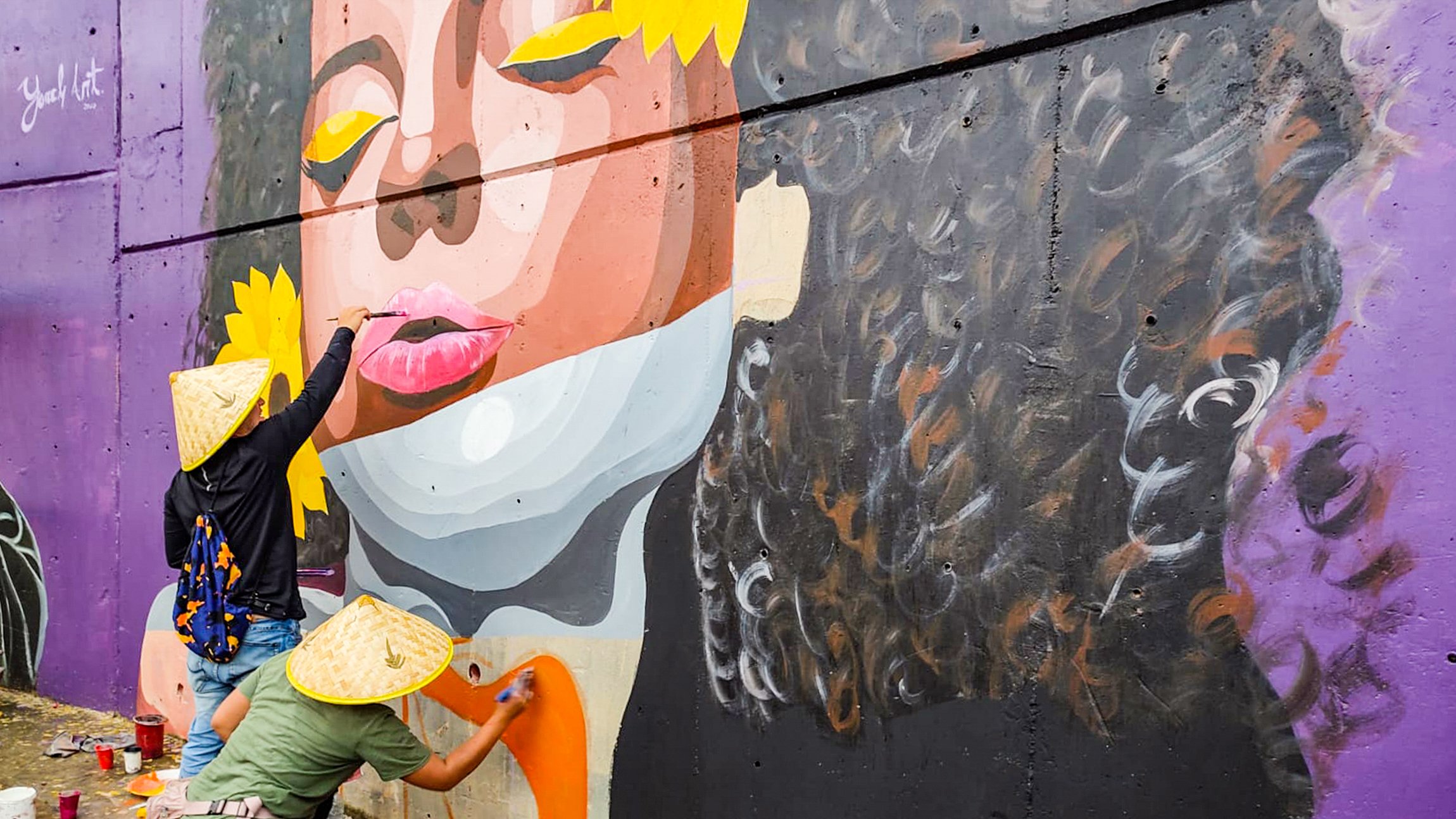
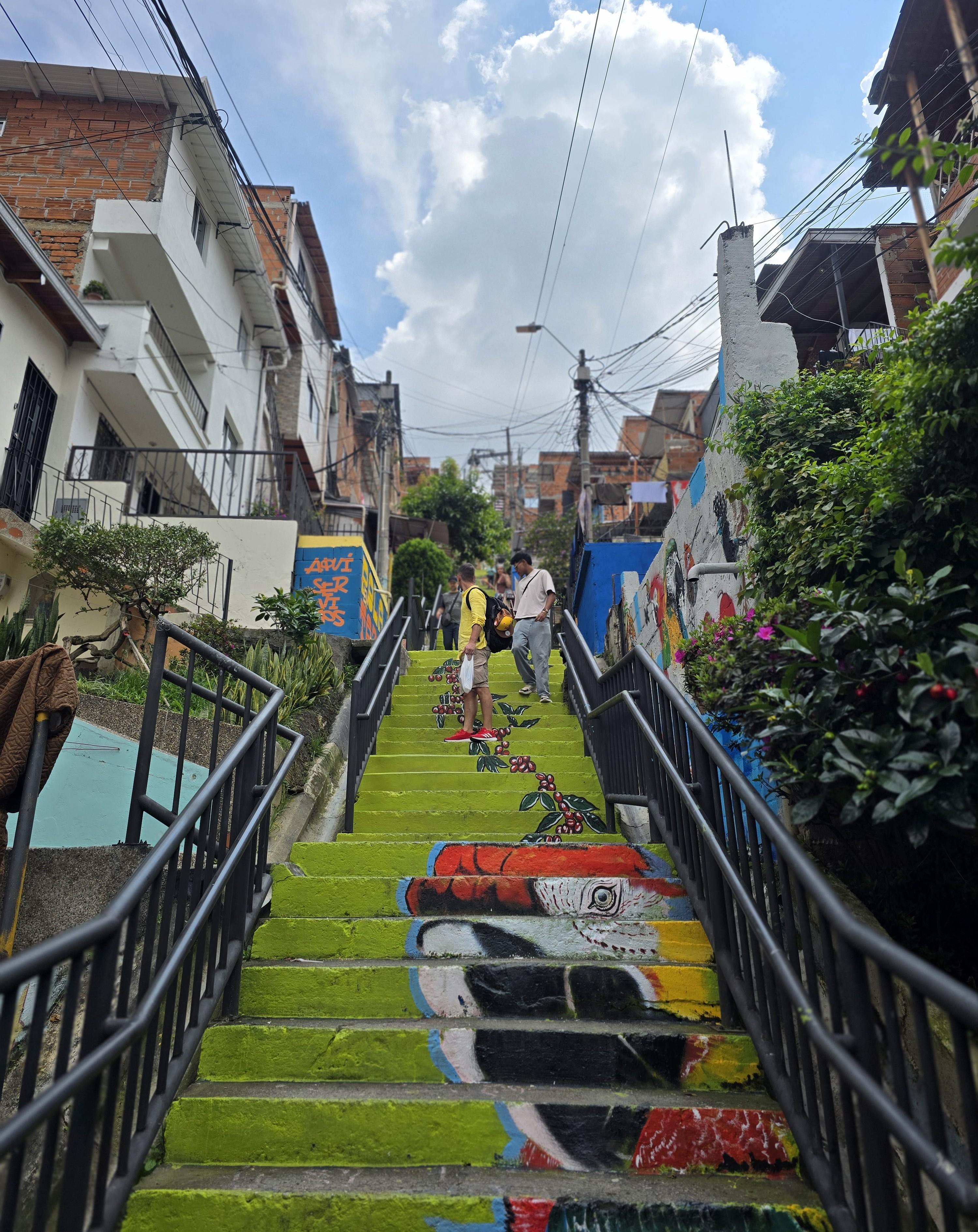
Comuna 13 was Medellín's most violent neighborhood until 2011, when the city installed outdoor escalators that cut a forty-minute uphill walk to six minutes and opened the barrio to the rest of the city. Artists moved in immediately. What began as protest tags evolved into commissioned murals spanning entire building facades, each panel documenting displacement, resilience, and reconciliation. Today the district holds over three hundred works, from stenciled memoria histórica portraits to vivid abstracts in neon pink and electric blue, layered across staircases, retaining walls, and rooftops. The transformation coincided with a gastronomic revival. Vendors who once sold arepas from carts now operate fixed stalls serving obleas with arequipe, empanadas de pipián, and cholado—a shaved-ice dessert piled with condensed milk, fruit syrup, and fresh mango. The comuna 13 graffiti tour with street food merges these parallel narratives: guided walks pause at murals by local crews like Chota 13 and AgroArte, then continue to family-run food stands where recipes predate the violence. The district's layout naturally segments the experience—escalator landings serve as viewing platforms, while the plazas between them host the food vendors. Architecturally, the escalators themselves are the anchor. The six-section system rises three hundred eighty-five meters, each segment encased in steel-and-glass canopies that frame the hillside. The murals respond to this infrastructure: some wrap the escalator housings, others climb the adjacent concrete staircases that locals still use. Hip-hop culture underpins the aesthetic—breakdancers perform on landings, and the murals reference graffiti conventions from the Bronx and São Paulo, adapted to Paisa idioms and Antioquian color palettes. The culinary component is equally deliberate. Street food here predates the art boom by decades, rooted in campesino cooking from the surrounding valleys. Vendors source maize from nearby farms, prepare mazamorra with panela instead of sugar, and grill chorizos over charcoal. A comuna 13 graffiti tour with street food typically includes three to four tastings—enough to demonstrate the region's culinary range without overwhelming the walking route. The food stops are spaced between mural clusters, offering both sustenance and social context. Guides, many of them longtime residents, explain how specific dishes tie to migration patterns and agricultural tradition, grounding the visual spectacle in lived history.
"What began as protest tags evolved into commissioned murals spanning entire building facades, each panel documenting displacement, resilience, and reconciliation."
A step-by-step walkthrough of the visit — what you'll see, how long each stage takes, and the details that matter.
You board the first escalator at Calle 107, the steel canopy overhead filtering late-morning light into soft geometric shadows. The ride up takes ninety seconds. At the first landing, your guide pauses at a mural by Chota 13—three storeys of interlocking faces in cadmium yellow and cobalt, each eye following a different sightline. You spend five minutes here, then climb a side staircase to a second escalator. The pattern repeats: ride, view, climb. At the third landing, you stop at a vendor stall for obleas—two thin wafers pressed with arequipe and shredded cheese. The vendor folds them into quarters; you eat standing, watching breakdancers rehearse on the adjacent plaza. Your guide explains the symbolism in the mural behind you—a woman's profile dissolving into butterflies, a reference to forced displacement in the 1990s. The fourth escalator deposits you at a mirador overlooking the valley. You pause for photographs, then descend a graffiti-lined alley to a cholado cart. The vendor shaves ice by hand, layers it with blackberry syrup and condensed milk, tops it with diced mango. You eat it while your guide recounts the neighborhood's history, gesturing toward specific murals that mark turning points. The final stretch is a slow walk downhill, past more murals and a few souvenir stalls, ending where you began.
The neighborhood is open daily from 08:00–17:00.
No, entry to the neighborhood and public escalators is 0 COP, though tours usually carry a service fee.
We recommend starting between 08:00–11:00 to avoid mid-day heat and large crowds.
No, it is a family-friendly experience suitable for all ages.
Yes, photography is highly encouraged throughout the graffiti tour.
The area uses outdoor escalators, but visitors should expect steep walking paths and stairs.
Bring comfortable shoes, water, sunscreen, and a small bag for your belongings.
Only tours explicitly labeled as a comuna 13 graffiti tour with street food include tastings.
Avoid bringing drones, large tripods, or excessive luggage to ensure easy movement on the paths.